
by Dr. Shlomo Kandelshein
Background:
In November 1941, the Nazis set up a concentration camp in Theresienstadt (Terezin), a historic fortress town in Western Bohemia (60 km from Prague). It was here that Czech Jews, as well as Jews from the Netherlands, Denmark and Central Europe, were imprisoned.
The town became a ghetto, run by the Gestapo, and was a concentration camp for the Jews of the Protectorate of Bohemia and Moravia. This camp, forced upon the inhabitants of the Czech Republic during the Nazi occupation, was a point from which Jews were subsequently sent to the extermination camps. The camp was under the authority of the Office for the Solution of the “Jewish Problem”, which in turn reported to the Reich Main Security Office. Life in the ghetto was managed by the Judenrat (the council of Jews in the camps, which served as an intermediary between the Nazi government and the prisoners).
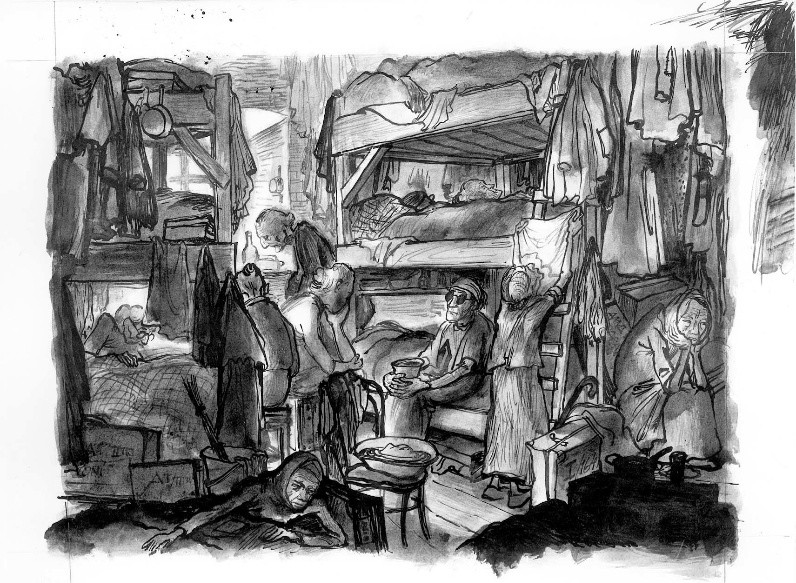
Prisoner quarters in Terezin. Illustration by Leo Haas. Source: Yad Vashem
Despite the difficult conditions of overcrowding, meager food, and forced labour, extensive educational, cultural, and sporting activities took place in the ghetto. These activities were an expression of the imprisoned Jews’ will to live, aiming to help them forget, if only for a fleeting moment, their terrible plight.
Schools and kindergartens were established in the camp (15,000 children and teenagers were held there), as well as a library, a theatre, an orchestra, and cabarets. Sports competitions, including a regular football league, were held, and a chess club also organised competitions and lectures.
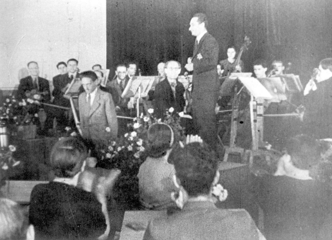
Theresienstadt Camp Orchestra. Source: Yad Vashem
Was this a kind of “ideal new life” against the backdrop of the unremitting extermination of the Jews, or rather, a dark and cynical plot from the feverish minds of the Nazis? How is it possible that, while many Jews were being sent on trains to extermination every day, a football league, a chess competition or a cabaret was being held a short distance away in the camp?
The Theresienstadt camp differed from other camps in the psychological cruelty it inflicted on the souls of the hapless prisoners – deceiving them through a carefully planned camouflage of a “model Jewish city”. The use of chess, among other things, was intended to create a visual illusion of intellectual and cultural life for the outside world, while, in practice, the prisoners were forced to perform for propaganda in order to survive mentally and physically.
At the end of 1943, news about what was happening in the extermination camps began to filter through into the free world, with stories about the mass extermination of Jews in occupied Europe published in the world media. To dispel the rumours, the Nazis decided to present the Red Cross with the “ideal life” observed in the “new Jewish settlement”, even producing a propaganda film about the camp.
The football league in Terezin
The football league in Terezin was founded by a Jewish prisoner, athlete, teacher, and well-known educator, Freddy Hirsch (1916-1944), who worked tirelessly to educate children and youth in the ghetto in the spirit of sports values, and who was later murdered in Auschwitz.
The league consisted of 12 teams, each with 7 players, and the games were held on Sundays between the years of 1942-1944. The groups were named after professionals in the camp (such as cooks, gardeners, electricians, etc.), or after Jewish sports clubs (“Maccabi”, “Hagibor “, “Hakoah”) and other sports clubs (Rapid, Sparta, etc.). There was a grim turnover within the teams, with players disappearing every round because they had been sent to the extermination camps during the week.
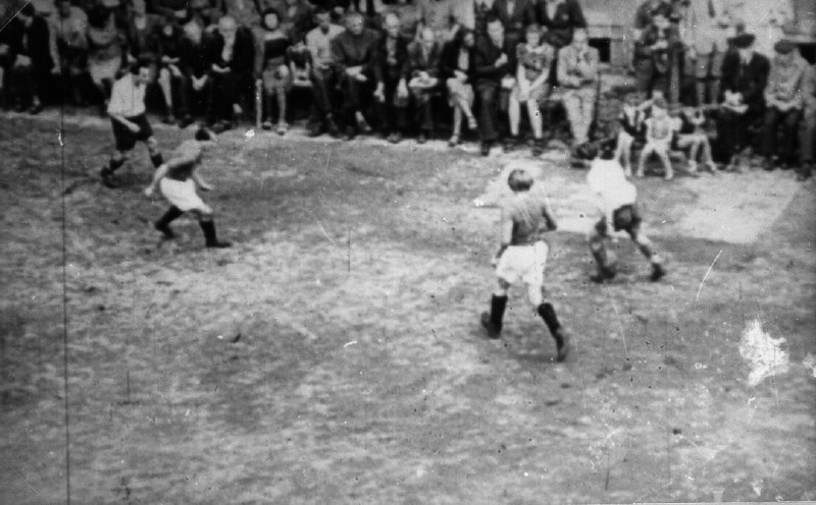
Football game in Terezin. Source: Beit Terezin website
The league also included outstanding footballers who had played in the Czech league teams before the war, including Peter Erben, who had played for Maccabi Brno, goalkeeper Jirka Tausing, and Pavel Mahrer, a footballer for the Czech national team at the 1924 Paris Olympics (Tausing and Mahrer survived the camp and emigrated to the United States at the end of the war). The league games were fascinating, and every game was watched by thousands of prisoners, who were devoted fans and cheered their teams on.
The footballer Peter Erben (1921-2017, a survivor of the camp, who immigrated to Israel in 1949 and started a family here) gave a description of the feeling these games aroused for the prisoners: “There was a great rush, because everyone wanted to see the players. People encouraged and cheered as if it was the most important thing at the time. The players were admired, and everyone loved being in their company and asking for autographs. “We gave a little joy, in a place where it was impossible to be happy”.
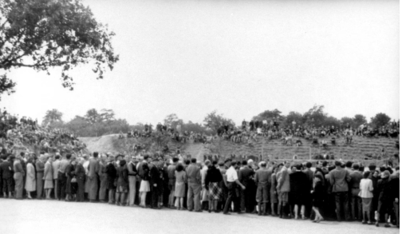
A large crowd watching a football game in Theresienstadt, 1944. Source: Yad Vashem
The Chess Club in Theresienstadt
In the summer of 1943, a chess section was set up in the camp (K/55) by Isidor Schorr (1883-1944), who had arrived in Theresienstadt in 1942. Schorr was a chess player who organised and managed chess tournaments in the Czech Chess Association. He also edited the book of the famous international competition Teplitz-Schonau 1922, which itself was also a theory book. In the camp, he served as the head of the chess club, organised chess tournaments and lectures in the various barracks in the camp, and also saw to the production of chess pieces and boards from cardboard, paper, bread, and cloth. His request for a handmade wooden chessboard from the prisoners in the carpentry shop was granted in exchange for… a loaf of bread, a reminder of the poverty of life in the camp.
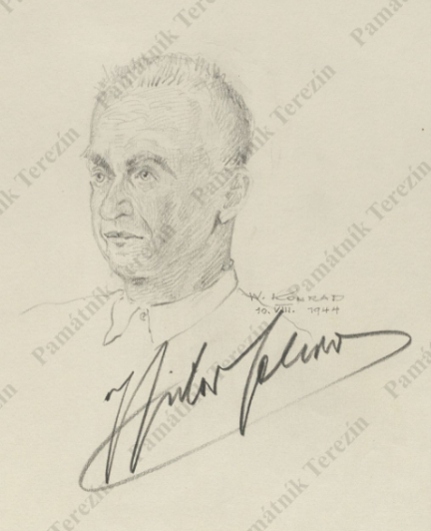
Portrait of Isidore Schur (painted by Wilhelm Konard). Source: Terezín Memorial, document PT 4273
Schor’s deputy was Jaroslav Dubsky, a Czech chess player (1901-1944) and captain of the Czech team at the 1935 Warsaw Olympics.
The two worked hard to promote extensive chess activity among the camp’s prisoners, offering the sport as a spiritual survival tool for the Jewish prisoners, who played chess in enormous crowds, a mental escape from daily anxiety, and a means through which to maintain some semblance of humanity in subhuman conditions. Occasionally, chess games also served as a cover for secret meetings of the underground forces.
In the Theresienstadt ghetto, two children’s newspapers were founded by two talented boys. The newspaper “Vedem” was founded by 14-year-old Peter Ginz, and the newspaper “Kamarad” by 16-year-old Ivan Pollak. The children’s papers published news about the camp’s chess tournaments, chess puzzles (such as checkmate in two moves), and stories about the history of chess. A horrifying quote was found in an interview in the newspaper “Kamarad” with a boy who played chess: “The game helps me pass the time until the next transport”. Another reference to the meaning of playing chess in the Theresienstadt camp was made by Ruth Bondi, a survivor of Theresienstadt, a journalist for “Davar” and an esteemed author (1923-2017): “Playing chess was a mental shield against the cruel reality”.
The “Crown” Speech at the Chess Tournament
In July 1942, the first chess tournament in the Theresienstadt camp opened with a moving opening speech, delivered by Jarosław Dowski. A speech that gave a sense of exaltation to the importance of chess in general and its importance to the Jews in particular:
“We can say with certainty that such a high level of chess would never have existed without the Jews and Slavs, and there would not have been such beauty in chess. At the Warsaw Olympics in 1935, not only were many of the top players Jews, but half of the players at the Olympics were Jews. Therefore, we have all the prerequisites for the successful development of the art of chess. Let us seize the opportunity, and I am convinced that the beautiful flowers of our royal game will quickly bloom here. Even under these circumstances, I wish you a good time at the first official chess tournament in Theresienstadt. Glory to the winner and honor to the loser”.
The Great Deception
In light of the rumours about the extermination of Jews in the camps, the Nazis decided to present the Theresienstadt camp and life there to an international Red Cross investigation commission, which was invited to visit Theresienstadt on June 23, 1944 (at the request of the Danish government regarding the fate of Danish prisoners sent to the camp).
In preparation for the commission’s arrival, additional deportations of Jews for extermination in Auschwitz were carried out, in order to both reduce overcrowding in the camp and demonstrate the well-being its residents supposedly enjoyed. On the SS’s orders, the camp morphed into what appeared to be an entirely different place to live, with fake shops and cafes opening, along with an active musical band. Special banknotes were printed for the bank that opened, a football match was held, and streets with names and numbers were set up. The entire camp was also flooded with gardens in bloom. Chess infrastructure was also improved for the film of this ruse, in the form of a club with a special balcony for the exhibition games.
This deception was a great success for the Nazis. The three members of the Red Cross investigation committee, headed by Dr. Moritz Rossel, watched a football match, a soap opera, kindergartens, and a chess tournament through a brutal and surrealist “shop window”. At the end of the visit, the committee published a positive report, stating that they were impressed by the place, which was “a city like all others.”
“Hollywood in the Valley of Killings”
Before the fake set was removed, the Nazis also made sure to produce a propaganda film titled: “Theresienstadt: The Jewish Settlement Area.” The film was directed by a Jewish prisoner from Germany, Kurt Gerron, who was a famous director and actor. Its actors were camp prisoners, who were forced to perform through humiliation and threats on their lives.
The film presented propaganda about the new life of the Jews under the auspices of the Third Reich, and featured Jews playing chess in a competition, watched by chess enthusiasts dressed in their best suits and ties… in a concentration camp. At the end of the film, its director, Kurt Geron, and all the actors and extras, as well as the camp leadership and many children, were sent to the Auschwitz extermination camp, where they were murdered.
The film was not shown to the general public and was found after the war in several archives.
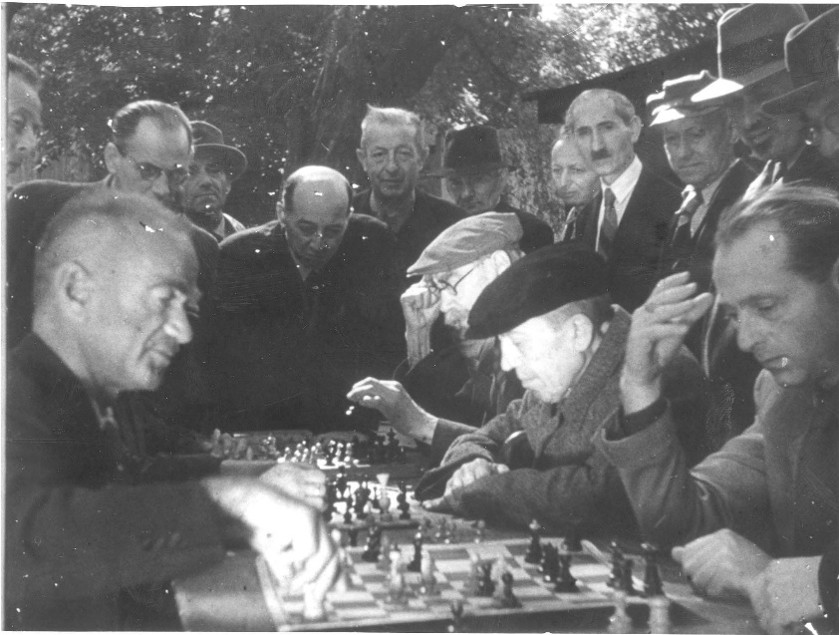
A game of chess in Terezin. From the German propaganda film made about the camp. Source: Yad Vashem
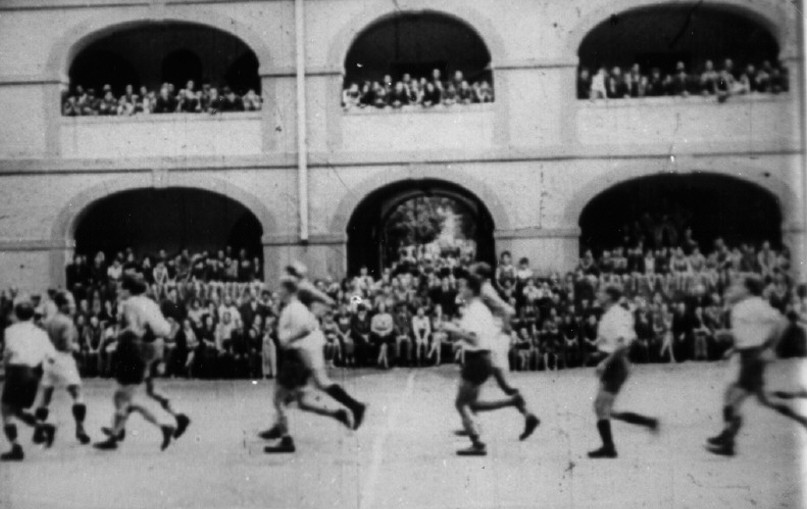
A football game in the barracks yard in Terezin. From the German propaganda film made about the camp. Source: Ghetto Fighters Museum
The fate of the leaders of the Theresienstadt chess club, Isidor Schor, Jaroslav Dovski, Albert Levit, and Josef Trakatsch, and many chess players, as well as the young journalists Peter Ginz and Ivan Polak, was no different. They were all murdered in 1944 in Auschwitz. The chess club fell silent in Theresienstadt.
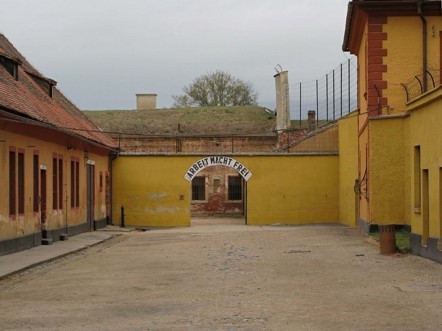
The gate of the Terezín camp with the sign “Work sets you free.” Source: Terezín Memorial
Summary
About 155,000 Jews were sent to Theresienstadt. Of these, approximately 34,000 perished in the camp, 87,000 perished and were murdered in extermination camps (mainly Auschwitz), 3,000 survived the extermination camps, and 23,000 were liberated from the camp on May 8, 1945 by the Red Army.
The story of the Jews in the camp, in the shadow of the Nazi’s cynical deception, preserves the memory of the Holocaust in a dark chapter in our history. The game of chess in Theresienstadt was a significant part of the Jewish prisoners’ attempt to maintain their dignity, keep their minds active, and relieve constant tension and fear. All this despite the suffering and humiliation they endured every day, and whilst living in the shadow of death below a gate proclaiming “Work Makes You Free.”
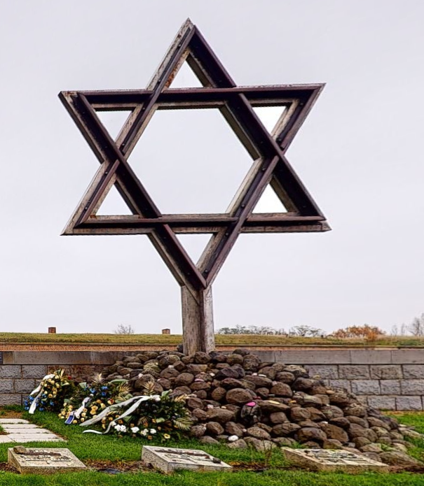
A monument in Terezín in memory of the victims. Source: Terezín Memorial